
Two Model Schools in Each Parliamentary Constituency: New Construction or Reforming Existing Education — Which is More Urgent?
A review of the proposed Tk 68,400 crore project in Bangladesh's education sector, establishing 600 new model schools and colleges, recruiting 27,000 teachers, and the reality of thousands of non-MPO educational institutions.
Introduction
A new plan has emerged for the development of Bangladesh's education system. It has been proposed to establish two model schools and colleges—one for boys and one for girls—in each of the 300 parliamentary constituencies across the country, totaling 600 institutions.
These proposed institutions are planned to operate with residential facilities modeled after cadet colleges, offering education from grades six to twelve alongside sports, swimming, cultural practice, technology, and technical education. The estimated cost of the project is around Tk 68,400 crore, requiring approximately 27,000 teachers and 1,800 acres of land.
Such an initiative for educational quality improvement certainly deserves discussion. However, the question arises: Is constructing 600 new institutions the most urgent task in Bangladesh's current educational landscape? While thousands of private schools remain non-MPO and existing schools face teacher shortages, prioritizing new structures over existing reforms warrants deep critical analysis.
1. The Proposed Model School Project at a Glance
According to published reports, the Preliminary Development Project Proposal (PDPP) has been sent to the Planning Commission, though it is not yet a finally approved project.
| Parameter | Proposed Quantity |
|---|---|
| Parliamentary Constituencies | 300 |
| Institutions per Constituency | 2 |
| Total Institutions | 600 |
| Boys' Institutions | 300 |
| Girls' Institutions | 300 |
| Total Estimated Cost | Tk 68,400 Crore |
| Potential Students | 6 Lakh |
| Required Teachers | 27,000 |
| Required Land | 1,800 Acres |
| Education Level | Grades 6 to 12 |
| Implementation Period | 2026–2031 |
2. Financial Analysis: How Massive is the Investment?
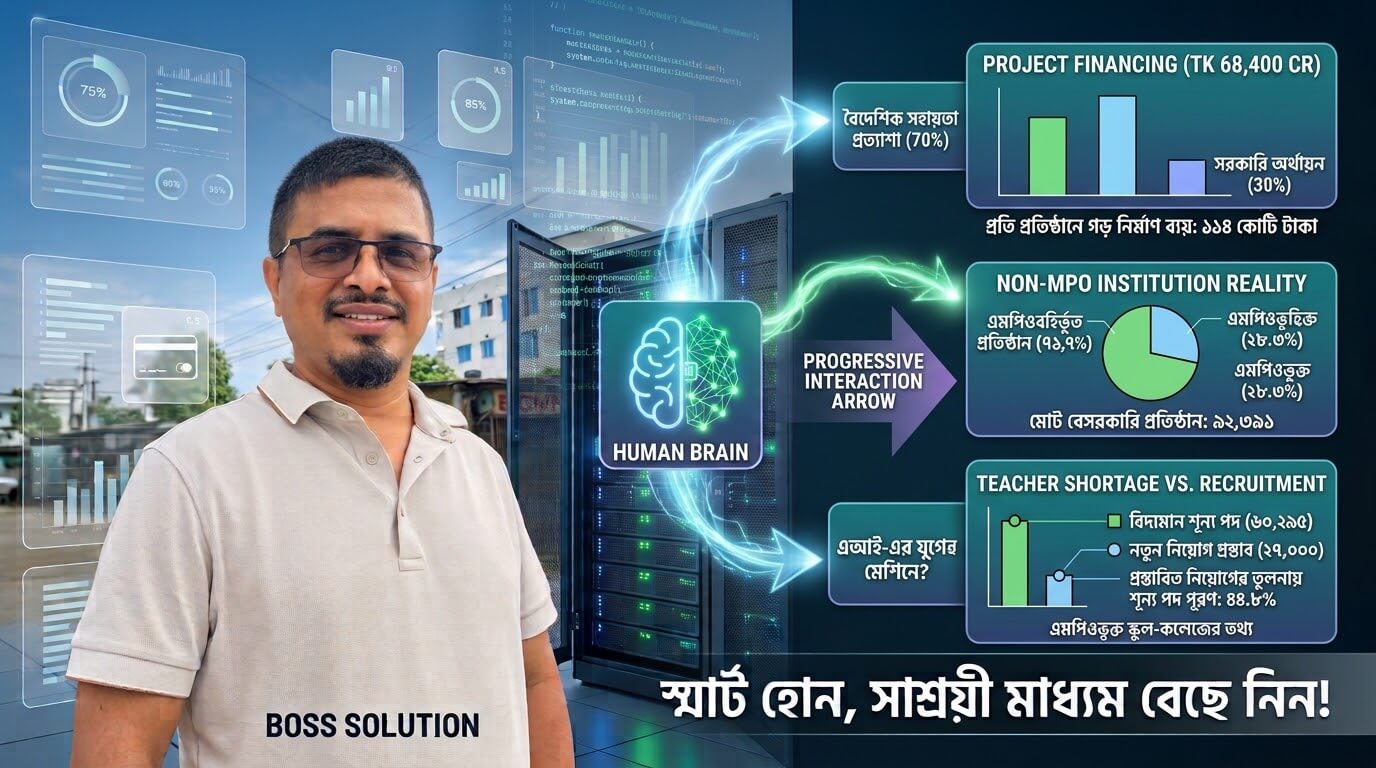
According to the financing plan of the proposed Tk 68,400 crore:
| Financing Source | Amount | Share |
|---|---|---|
| Government Financing | Tk 20,520 Crore | 30% |
| Expected Foreign Assistance | Tk 47,880 Crore | 70% |
| Total | Tk 68,400 Crore | 100% |
Initial estimates show:
- Average construction and project cost per institution: Tk 114 crore.
- Total project cost per student: Tk 1.14 lakh.
- Total project cost per teacher: Tk 2.53 crore.
3. The Reality of Non-MPO Educational Institutions
According to the Bangladesh Bureau of Statistics (BBS) Private Educational Institutions Survey 2024:
| Description | Number of Institutions |
|---|---|
| Total Private Educational Institutions | 92,391 |
| MPO-Enlisted Institutions | 26,104 |
| Non-MPO Institutions | 66,287 |
Roughly 71.7% of surveyed private educational institutions operate outside MPO support. Teachers in non-MPO institutions often work without regular salaries, creating serious financial distress and impacting educational standards.
4. Teacher Shortage: Filling Old Vacancies vs. New Recruitment
On April 8, 2026, data presented in Parliament indicated 60,295 vacant teaching posts in MPO-listed schools and colleges. Comparing existing vacancies against proposed new hires:
| Metric | Number of Teachers |
|---|---|
| Existing Vacant Posts in MPO Institutions | 60,295 |
| Proposed Teachers for New Model Schools | 27,000 |
| New Recruitment vs. Vacant Posts Ratio | Approx 44.8% |
5. Lack of Institutions or Lack of Quality Education?
While 2,839 villages lack primary schools, the fundamental issue across secondary levels is often quality rather than quantity. Targeted region-specific investments are necessary rather than uniform national templates.
6. 600 New Institutions vs. Reforming Existing Infrastructure
Upgrading existing schools with science labs, filling vacant positions, and providing MPO support yields widespread benefits faster and more cost-effectively than constructing brand-new campuses from scratch.
7. Positive Potential of the Model School Project
Residential facilities, separate campuses for boys and girls, modern labs, swimming facilities, and vocational training offer strong educational advancement opportunities if managed with transparency and merit-based access.
8. Key Questions Before Implementation
Clear answers are required regarding operational budgets, selection criteria per constituency, foreign loan commitments, and equitable access for underprivileged rural students.
9. Alternative Priorities: A Balanced Educational Plan
- Nationwide school capacity and demand survey.
- Phased MPO enlistment of eligible institutions.
- Filling existing 60,000+ teacher vacancies.
- Infrastructure maintenance and modern lab setup.
- Targeted model school construction only in underserved areas.
10. What Should Be the Core Goal of Education Development?
True success lies not in building new structures, but in ensuring quality learning, fair teacher compensation, zero student dropouts, and reducing urban-rural educational inequality.
Conclusion: Taking Responsibility for Existing Institutions
Educational reform means protecting existing schools, honoring teachers with dignified living wages, and ensuring quality education for every child alongside new infrastructure projects.
— Editorial Desk
BOSS Solution
প্রতি সংসদীয় আসনে দুটি মডেল স্কুল: নতুন প্রতিষ্ঠান নির্মাণ, নাকি বিদ্যমান শিক্ষা ব্যবস্থার সংস্কার—কোনটি বেশি জরুরি?
বাংলাদেশের শিক্ষা খাতে ৬৮ হাজার ৪০০ কোটি টাকার প্রস্তাবিত প্রকল্প, ৬০০টি নতুন মডেল স্কুল অ্যান্ড কলেজ, ২৭ হাজার শিক্ষক নিয়োগ এবং হাজার হাজার নন-এমপিও শিক্ষাপ্রতিষ্ঠানের বাস্তবতা নিয়ে একটি পর্যালোচনা।
ভূমিকা
বাংলাদেশের শিক্ষা ব্যবস্থার উন্নয়নে নতুন একটি পরিকল্পনা সামনে এসেছে। দেশের ৩০০টি সংসদীয় আসনের প্রতিটিতে দুটি করে—একটি বালকদের এবং অন্যটি বালিকাদের জন্য—মোট ৬০০টি মডেল স্কুল অ্যান্ড কলেজ প্রতিষ্ঠার প্রস্তাব করা হয়েছে।
প্রস্তাবিত প্রতিষ্ঠানগুলো ক্যাডেট কলেজের আদলে আবাসিক সুবিধাসহ পরিচালিত হওয়ার কথা। ষষ্ঠ থেকে দ্বাদশ শ্রেণি পর্যন্ত পাঠদানের পাশাপাশি খেলাধুলা, সাঁতার, সাংস্কৃতিক চর্চা, প্রযুক্তি ও কারিগরি শিক্ষার সুযোগ রাখার পরিকল্পনা রয়েছে। প্রকল্পটির প্রস্তাবিত ব্যয় প্রায় ৬৮ হাজার ৪০০ কোটি টাকা। প্রয়োজন হবে প্রায় ২৭ হাজার শিক্ষক এবং ১ হাজার ৮০০ একর জমি।
শিক্ষার মানোন্নয়নে এমন উদ্যোগ নিঃসন্দেহে আলোচনার দাবি রাখে। কিন্তু প্রশ্ন হচ্ছে, বাংলাদেশের বর্তমান শিক্ষা বাস্তবতায় নতুন ৬০০টি প্রতিষ্ঠান নির্মাণই কি সবচেয়ে জরুরি কাজ?
যে দেশে হাজার হাজার বেসরকারি শিক্ষাপ্রতিষ্ঠান এখনো এমপিওভুক্ত নয়, যেখানে অনেক শিক্ষক বছরের পর বছর বিনা বেতনে পাঠদান করছেন, যেখানে বিদ্যমান প্রতিষ্ঠানগুলো শিক্ষকসংকট ও অবকাঠামোগত সমস্যায় ভুগছে—সেখানে নতুন প্রতিষ্ঠান নির্মাণের আগে বিদ্যমান শিক্ষা ব্যবস্থার সমস্যাগুলো সমাধানের বিষয়টি কি যথেষ্ট গুরুত্ব পাচ্ছে?
১. প্রস্তাবিত মডেল স্কুল প্রকল্প: একনজরে
প্রকাশিত সংবাদ অনুযায়ী, প্রকল্পটির প্রাথমিক উন্নয়ন প্রকল্প প্রস্তাব (পিডিপিপি) পরিকল্পনা কমিশনে পাঠানো হয়েছে। এটি এখনো চূড়ান্ত অনুমোদিত প্রকল্প নয়।
| বিষয় | প্রস্তাবিত পরিমাণ |
|---|---|
| সংসদীয় আসন | ৩০০টি |
| প্রতি আসনে প্রতিষ্ঠান | ২টি |
| মোট প্রতিষ্ঠান | ৬০০টি |
| বালকদের প্রতিষ্ঠান | ৩০০টি |
| বালিকাদের প্রতিষ্ঠান | ৩০০টি |
| মোট প্রস্তাবিত ব্যয় | ৬৮,৪০০ কোটি টাকা |
| সম্ভাব্য শিক্ষার্থী | ৬ লাখ |
| প্রয়োজনীয় শিক্ষক | ২৭,০০০ |
| প্রয়োজনীয় জমি | ১,৮০০ একর |
| শিক্ষার স্তর | ষষ্ঠ থেকে দ্বাদশ |
| প্রস্তাবিত বাস্তবায়নকাল | ২০২৬–২০৩১ |
২. প্রকল্পের আর্থিক বিশ্লেষণ: কত বড় বিনিয়োগ?
প্রস্তাবিত ৬৮ হাজার ৪০০ কোটি টাকার অর্থায়ন পরিকল্পনা অনুযায়ী:
| অর্থায়নের উৎস | পরিমাণ | অংশ |
|---|---|---|
| সরকারি অর্থায়ন | ২০,৫২০ কোটি | ৩০% |
| বৈদেশিক সহায়তা প্রত্যাশা | ৪৭,৮৮০ কোটি | ৭০% |
| মোট | ৬৮,৪০০ কোটি | ১০০% |
প্রাথমিক হিসাব অনুযায়ী:
- প্রতি প্রতিষ্ঠানে গড় নির্মাণ ও প্রকল্প ব্যয়: ১১৪ কোটি টাকা।
- প্রতি শিক্ষার্থীর বিপরীতে মোট প্রকল্প ব্যয়: ১ লাখ ১৪ হাজার টাকা।
- প্রতি শিক্ষকের বিপরীতে প্রকল্পের মোট ব্যয়: প্রায় ২ কোটি ৫৩ লাখ টাকা।
৩. দেশে নন-এমপিও শিক্ষাপ্রতিষ্ঠানের বাস্তবতা
বাংলাদেশ পরিসংখ্যান ব্যুরোর (বিবিএস) বেসরকারি শিক্ষা প্রতিষ্ঠান জরিপ ২০২৪-এর তথ্য অনুযায়ী:
| বিবরণ | প্রতিষ্ঠানের সংখ্যা |
|---|---|
| মোট বেসরকারি শিক্ষাপ্রতিষ্ঠান | ৯২,৩৯১ |
| এমপিওভুক্ত প্রতিষ্ঠান | ২৬,১০৪ |
| এমপিওবহির্ভূত প্রতিষ্ঠান | ৬৬,২৮৭ |
অর্থাৎ জরিপে অন্তর্ভুক্ত বেসরকারি শিক্ষাপ্রতিষ্ঠানের প্রায় ৭১.৭ শতাংশ এমপিওর বাইরে। এমপিওবিহীন অনেক প্রতিষ্ঠানের শিক্ষক-কর্মচারী নিয়মিত বেতন না পেয়ে কঠিন আর্থিক সংকটে দিন কাটাচ্ছেন।
৪. শিক্ষকসংকট: নতুন নিয়োগের পাশাপাশি পুরোনো শূন্যপদ পূরণ কি জরুরি নয়?
২০২৬ সালের ৮ এপ্রিল জাতীয় সংসদে শিক্ষামন্ত্রীর দেওয়া তথ্য অনুযায়ী, এমপিওভুক্ত স্কুল ও কলেজে ৬০,২৯৫টি শিক্ষক পদ শূন্য ছিল।
| বিষয় | শিক্ষকসংখ্যা |
|---|---|
| এমপিওভুক্ত প্রতিষ্ঠানে বিদ্যমান শূন্য পদ | ৬০,২৯৫ |
| নতুন মডেল স্কুলে প্রস্তাবিত শিক্ষক | ২৭,০০০ |
| শূন্য পদের তুলনায় নতুন নিয়োগ | প্রায় ৪৪.৮% |
৫. শিক্ষা প্রতিষ্ঠানের অভাব আছে, নাকি মানসম্মত শিক্ষার অভাব?
বাংলাদেশের সব অঞ্চলের শিক্ষাব্যবস্থা এক রকম নয়। কোনো এলাকায় পর্যাপ্ত স্কুল-কলেজ থাকলেও ভালো শিক্ষক, বিজ্ঞানাগার ও প্রযুক্তির অভাব রয়েছে। ২০২৬ সালের সংসদীয় তথ্যানুযায়ী ২,৮৩৯টি গ্রামে প্রাথমিক বিদ্যালয় নেই। শিক্ষার স্তর ও অঞ্চলভেদে প্রকৃত চাহিদা নিরূপণ করা অত্যন্ত জরুরি।
৬. নতুন ৬০০টি প্রতিষ্ঠান বনাম বিদ্যমান শিক্ষা ব্যবস্থার উন্নয়ন
বিদ্যমান অবকাঠামোর সংস্কার, যোগ্য প্রতিষ্ঠানকে এমপিও প্রদান এবং শূন্য শিক্ষক পদ পূরণ নিশ্চিত করা হলে অনেক কম খরচে বিপুল সংখ্যক শিক্ষার্থী সরাসরি উপকৃত হবে।
৭. মডেল স্কুল প্রকল্পের ইতিবাচক সম্ভাবনা
আবাসিক সুবিধা, আধুনিক বিজ্ঞানাগার, কারিগরি শিক্ষা ও খেলাধুলার সুযোগ শিক্ষার্থীদের বহুমুখী বিকাশে সহায়তা করতে পারে, যদি স্বচ্ছ ভর্তি প্রক্রিয়া ও মানসম্পন্ন ব্যবস্থাপনা নিশ্চিত করা হয়।
৮. প্রকল্প বাস্তবায়নের আগে যে প্রশ্নগুলোর উত্তর প্রয়োজন
বার্ষিক পরিচালন ব্যয়, বৈদেশিক অর্থায়ন নিশ্চিতকরণ, নন-এমপিও শিক্ষকদের ভবিষ্যৎ পরিকল্পনা এবং সাধারণ দরিদ্র শিক্ষার্থীদের অংশগ্রহণের নিশ্চয়তা সম্পর্কিত স্পষ্ট রূপরেখা প্রয়োজন।
৯. বিকল্প অগ্রাধিকার: শিক্ষা উন্নয়নে একটি ভারসাম্যপূর্ণ পরিকল্পনা
- দেশব্যাপী শিক্ষাপ্রতিষ্ঠানের চাহিদা ও সক্ষমতা জরিপ।
- যোগ্য নন-এমপিও প্রতিষ্ঠানের পর্যায়ক্রমিক এমপিওভুক্তি।
- বিদ্যমান প্রতিষ্ঠানের ৬০ হাজারের বেশি শূন্য শিক্ষক পদ পূরণ।
- জরাজীর্ণ ভবন সংস্কার ও আধুনিক বিজ্ঞান/কম্পিউটার ল্যাব স্থাপন।
- প্রকৃত ঘাটতি থাকা অঞ্চলে নতুন মডেল স্কুল নির্মাণ।
১০. শিক্ষা উন্নয়নের মূল লক্ষ্য হওয়া উচিত কী?
প্রকৃত সাফল্য নির্ভর করে কতজন শিক্ষার্থী মানসম্মত শিক্ষা পেল, কতজন শিক্ষক ন্যায্য বেতন পেলেন এবং গ্রাম ও শহরের শিক্ষার বৈষম্য কতটা কমল তার ওপর।
উপসংহার: নতুন ভবনের পাশাপাশি পুরোনো প্রতিষ্ঠানগুলোর দায়িত্বও নিতে হবে
শিক্ষা উন্নয়ন মানে শুধু নতুন স্কুল নির্মাণ নয়; শিক্ষা উন্নয়ন মানে বিদ্যমান স্কুলকে বাঁচিয়ে রাখা, শিক্ষককে সম্মানজনক জীবন দেওয়া এবং প্রতিটি শিশুর জন্য মানসম্মত শিক্ষা নিশ্চিত করা।
— সম্পাদনা ডেস্ক
বস সল্যুশন (BOSS Solution)

Mominul Islamমমিনুল ইসলাম (Mominul Sir) (মমিনুল স্যার)
An educator, programmer, web developer, SEO expert, ethical hacker, and technical and freelance writer.একজন শিক্ষাবিদ, প্রোগ্রামার, ওয়েব ডেভেলপার, এসইও (SEO) বিশেষজ্ঞ, এথিক্যাল হ্যাকার এবং প্রযুক্তি বিষয়ক ও ফ্রিল্যান্স লেখক।